

Why your LinkedIn content affects how people find you online (thanks to AI)
There’s a quiet shift happening in how people find brands online, and it has nothing to do with hashtags or posting times. AI search engines like ChatGPT, Google AI Mode, and Perplexity are now actively shaping how your brand is discovered, described, and evaluated. A recent study analysing 89,000 LinkedIn URLs cited by these tools gives a fascinating look at exactly what gets noticed, and what doesn’t.
LinkedIn is already a trusted source for AI
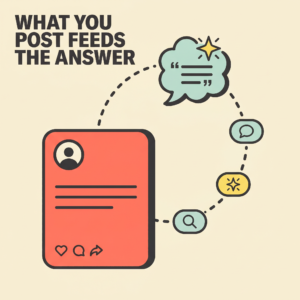
LinkedIn ranks second among the most cited domains across AI models, appearing in 11% of AI responses on average across ChatGPT Search, Perplexity, and Google AI Mode. That’s a significant share of attention, and it means whatever your LinkedIn presence says about you right now is actively feeding into how AI describes your brand to other people.
It goes further, meaning AI responses often closely mirror the meaning of the original content. In other words, what you write on LinkedIn isn’t just a source, it can directly shape the language AI uses to explain who you are and what you do. (So no more discussions about your holiday unless you are a travel agent!!).
What actually gets cited
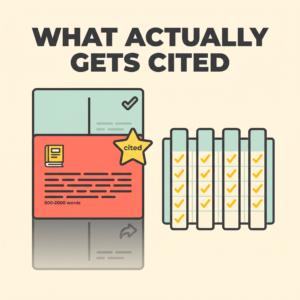
This is the part worth paying attention to. It isn’t viral content getting picked up. It’s original, educational material, long-form articles between 500 and 2,000 words and mid-length posts of 50 to 299 words. The vast majority of cited posts focus on sharing knowledge or practical advice. Reshares barely get a look in.
Engagement plays a role too, but not in the way you’d expect. Most cited posts have only moderate engagement, somewhere in the 15 to 25 reaction range. What matters more is consistency. The majority of cited authors post frequently, several times over a four week period, and have a reasonably established following.
There’s also a split worth knowing about. Perplexity tends to favour Company Pages, while ChatGPT Search and Google AI Mode lean towards individual creators. I’m afraid to say that practically, this means you need both. A strong company presence and individual thought leadership, not one or the other.
The real takeaway

None of this is really about LinkedIn specifically. It’s about strategy. The brands and individuals showing up in AI search results aren’t the ones posting the most, or chasing trends, or hoping something goes viral. They’re the ones consistently sharing useful, original thinking that has a clear point of view.
That’s the difference between scattergun posting and strategic content. Posting for the sake of posting might keep an account ticking over, but it won’t build the kind of credibility that gets picked up, trusted and repeated, by people or by AI.
If there’s one thing to take from this, it’s that quality and consistency now matter in places you can’t fully see or control. Showing up with substance isn’t just good practice anymore, it’s becoming the difference between being part of the conversation AI is having about your industry, or being left out of it entirely.
If you want to dig into the full research, the original study from Semrush is well worth a read: semrush.com/blog/linkedin-ai-visibility-study
Or if you want help building a content strategy that actually holds up, on LinkedIn and beyond? Get in touch about a Power Hour.